Two studies demonstrating CEP benefit!
More – Blood Circulation With cep® Compression Sportsocks
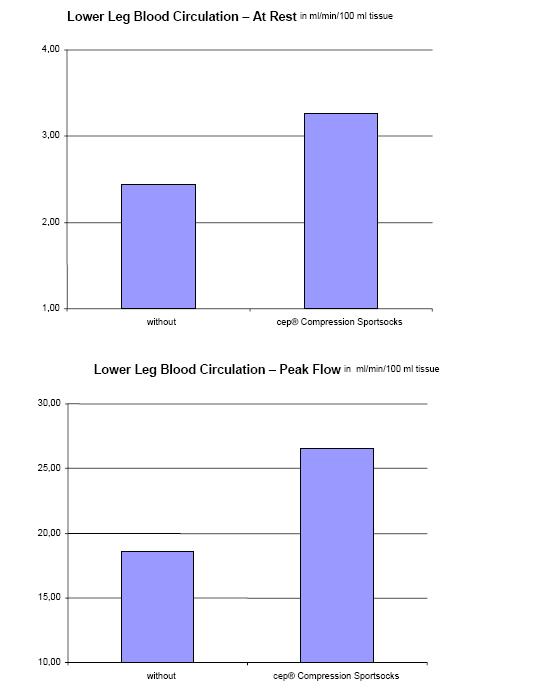
Consistent pressure from the outside, an effect that can be attained by wearing tightly fitted sports clothing, causes an increased blood circulation in the extremities, e.g. arms and legs. We have conducted a comprehensive study on blood circulation in the forearm and our results confirmed that the optimal increase in blood flow is reached through consistent compression pressure*. Both the blood circulation at rest as well as the maximal blood circulation (peak flow after a five-minute arterial congestion = maximal blood circulation under physical strain) experience a signficant increase. The blood circulation of the lower leg can also be increased by wearing compression sportsocks. In a pilot run with the cep® compression sportsocks that exert an almost consistent compression pressure onto the entire lower leg we discovered an increase in blood circulation at rest by an approximate 30% and an increase in peak flow of approximately 40%. The decisive feature of the cep® compression sportsocks that produce such a considerable increase in blood flow is the consistent pressure. This concept of compression, which affects the arterial vessels, has been designed and developed by us and is protected by a patent**. This is the main feature of the cep® compression sportsocks which distinguishes them from the traditional compression socks that are supposed to improve the venous return of blood back to the heart. A considerable difference exists to so-called compression socks which are already sold on the sporting goods market and to some extent differ considerably from cep® compression sportsocks with regard to the flow of pressure.
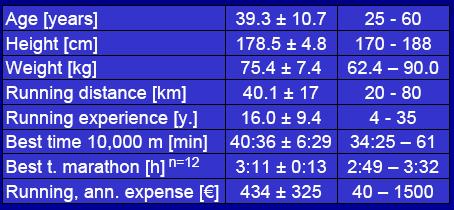
* * * * * * * * * * * * Effect of compressive running socks on the physiological performance parameters in ambitious amateur runners Kemmler, W.; von Stengel, S.; Köckritz, C.; Kalender, W. Institute for Medical Physics, Friedrich-Alexander University, Erlangen-Nürnberg Introduction The positive effect of compressive running socks upon the peripheral blood circulation and the venous backpressure of the muscles is sufficiently known. To what degree this improved blood circulation is concurrent with a performance improvement in endurance sports has not yet been investigated. For this reason this study pursued the question of the effect of compressive cep® running socks (CEP, Himmelkron, Germany) on the physical (time under load, work) and physiological parameters in "ambitious amateur runners". Methodology A total of 21 "amateur runners" with a training frequency of 2-5 training units per week were included. The athletes completed a test with "cep® running socks" and a test with their usual socks in a randomly arranged sequence with the gap between the tests being > 48 h. Table 1 illustrates the start conditions for our athletes.
Lactate performance diagnosis: Blood sampling at the finger tip. Calculation of the blood lactate level using Lactat-Scout. Threshold determination according to Dickhuth (min. + 0.5 mmol; min. +1.5 mmol). Calculation of physical values Work: Performance x time. Performance per stage (via automatic output of the spirometric program) was summed up for the stages. Results
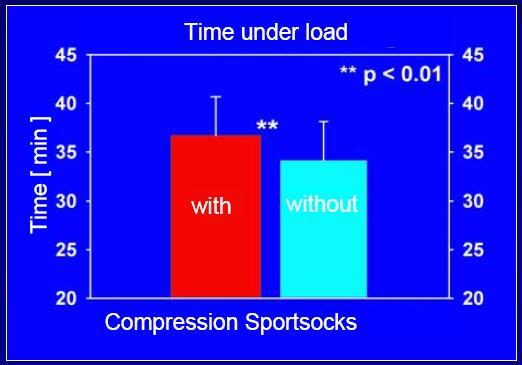
The time under load (= running time) in the staged test was approx 5% higher with compressive cep® running socks, the work achieved as the net criterion of the performance approx. 6% higher than without compressive running socks (cep®). The velocities at the "aerobic" (min. + 0.5 mmol) and aerobic/anaerobic (min. + 1.5 mmol lactate) threshold were also significantly higher (0.20 – 0.25 km/h in each case). The results of the study indicated that the maximal consumption of oxygen (VO2max) tends to increase by 3%. In summary a higher velocity could be implemented with compressive running socks on the maximum and sub-maximum metabolic load levels, definitively confirming the question about a "performance improvement".
|
QVI Home Virtual Vein Center Why QVI really is the Best in Vascular Ultrasound! Case of the Month Patients Referring Physicians Health Professionals Site Map |
Current Happenings

Introducing our new educational website.

Virtual Vein Center is a new concept in educational delivery. Get the education you need and want, when you need it. If you need CME, you can get them here as well.
To read more about it, click here for a complete page. Feel free to go to the site and browse around.


Several QVI staff took time to attend the 2014 American College of Phlebology Annual Congress in Phoenix Arizona in November to deliver numerous workshops and lectures. It was a high quality meeting as usual. The complete program is available for download here.

The 2014 SVU Annual Conference was held in Orlando and several QVI attended and presented numerous presentations. Jeannie was also honored as a Fellow of the SVU.
To read more
Jeannie recently attended the 25th Society of Vascular Medicine 2014 Annual Conference as an invited speaker in La Jolla, Ca. Her numerous lectures were very well received.
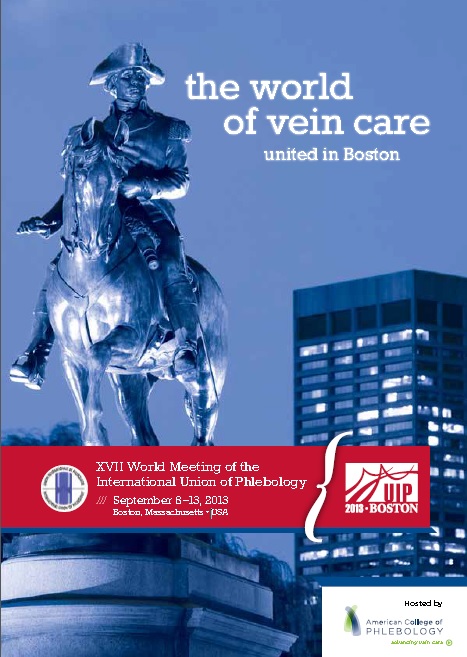
The International Union of Phlebology, in conjunction with the American College of Phlebology held its World Meeting in Boston in September 2013. Held only every 4 years, this was the first time ever in the US. Several QVI staff were invited speakers presenting some original scientific research.
Sydney, Australia

Bill was the International Keynote Speaker at the Australian Sonographer Association Annual National Conference in Sydney.
What a great experience!
To read more about this and our other international teaching

QVI was once again awarded the D.E. Strandness Award for Scientific Excellence at the 2013 SVU Annual Conference.
To read more -
Medical Compression socks continue to be on the forefront of venous treatment. Recently, they have entered the realm of the athlete. To learn more about what compression socks can do you you, please visit compressionsocks.pro

QVI wins the D.E Strandness Award at the 2012 SVU Annual Conference!
Read more about it!
To go to the
CASE OF THE MONTH!
Click the QVI logo
Compression Socks?
We carry the BEST!
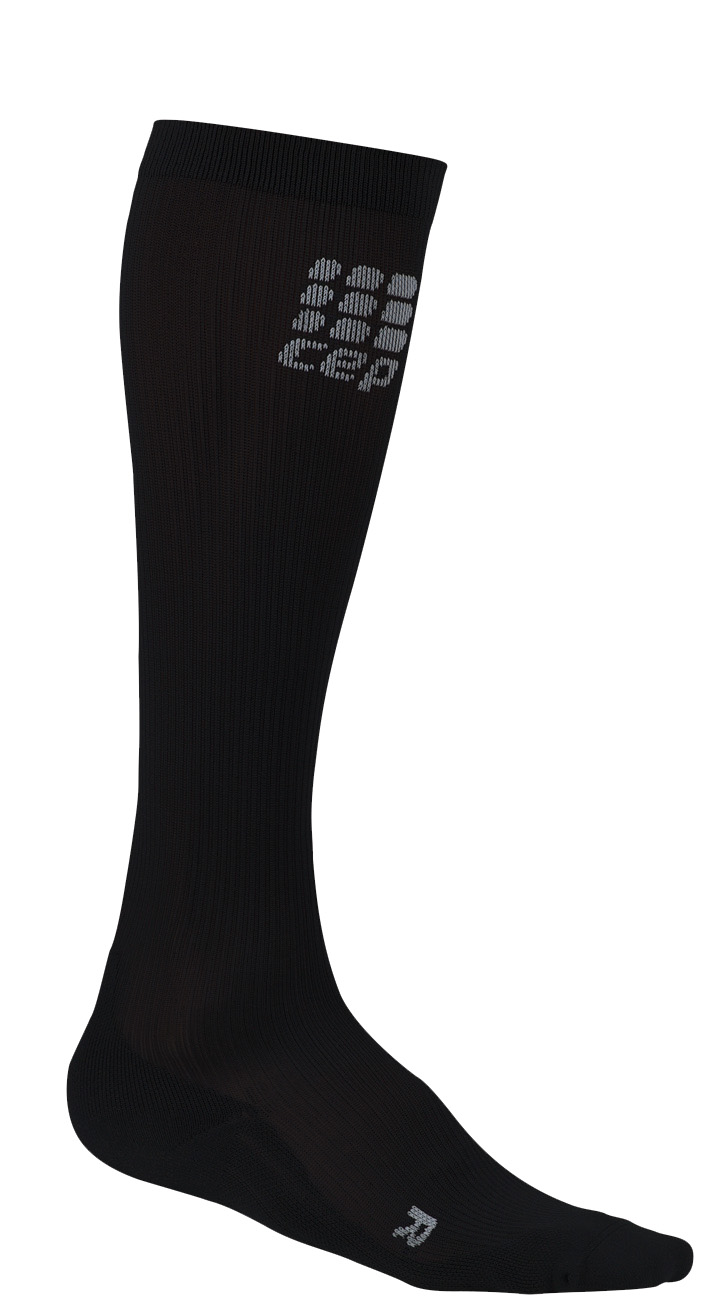
Compression socks are not only a main stay in the treatment of venous and lymphatic disease but are now used by elite athletes everywhere. Please visit our webstore for more information about compression therapy by clicking the image above! .