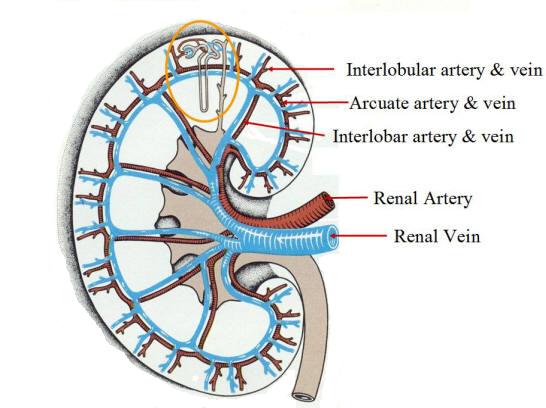
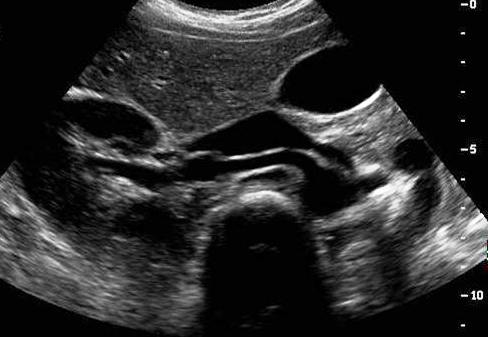
Renal Artery Stenosis - Renal artery stenosis (or a narrowing of the kidney artery) is most commonly caused by atherosclerosis or hardening of the arteries, although there are other causes such a fibro-muscular dysplasia . If the narrowing is severe enough, it can limit the flow of blood to the kidneys. When the kidneys do not receive adequate blood flow, they attempt to compensate by elevating blood pressure. While not the most common cause of high blood pressure, if left untreated it often progresses to renal insufficiency (renal failure). Therefore, if your physician has a suspicion that you may have renovascular hypertension, a duplex ultrasound may be ordered to determine if you have any narrowing. Duplex ultrasound, a relatively inexpensive, noninvasive technique, is particularly suited to detect a narrowing as it obtains pictures of the vessels and information about the blood flow in real time. No other technique provides both the anatomic and physiologic information which is of prime importance in this condition. Real time color flow image of renal vasculature! Diagram of renal vasculature
Figure 3 Figure 4
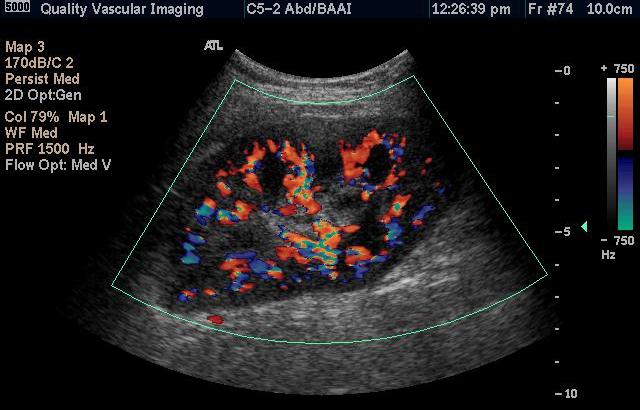
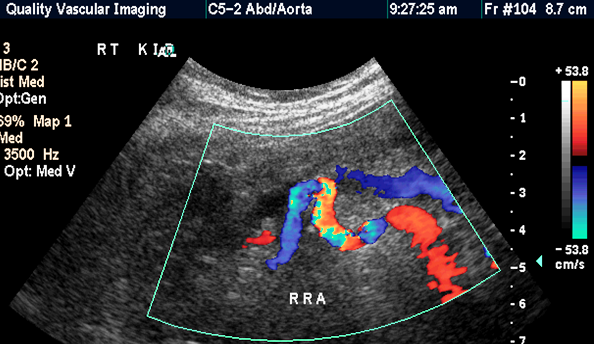
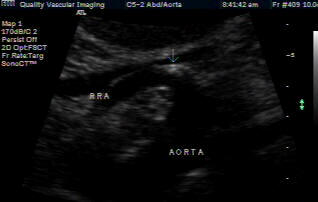
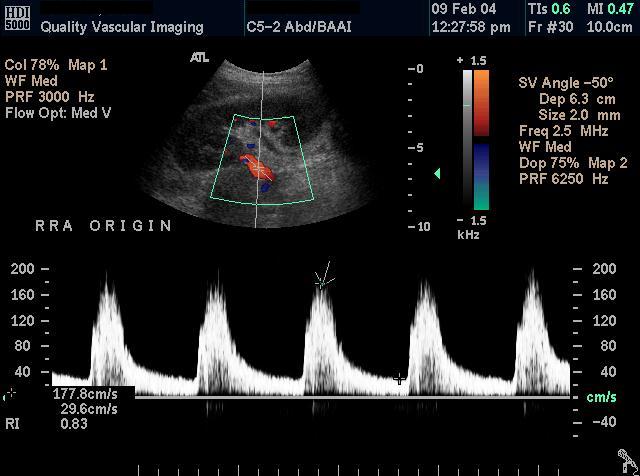
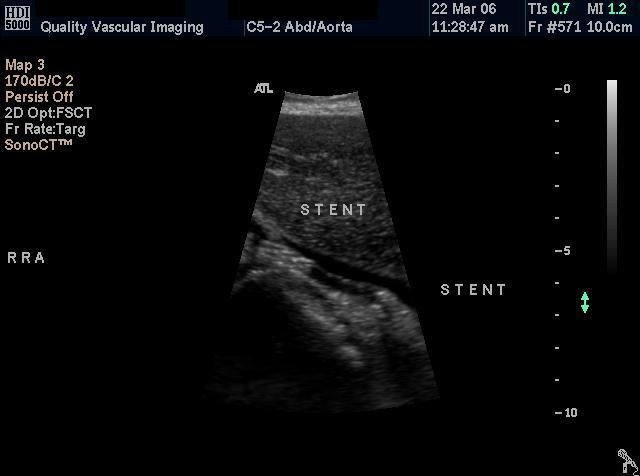
Figure 5 Figure 6 Figure 1 - Normal renal artery shown in gray scale from the aorta to the kidney Figure 2 - Tortuous (curvy) renal artery shown with color Doppler Figure 3 - Ultrasound image of the kidney and renal vasculature. Figure 4 - Gray scale image of a renal artery showing minor plaque at the orign. Ultrasound is able to show great detail. Figure 5 -Spectral analysis of the blood flow in a right renal artery showing a borderline hemodynamically significant stenosis. Figure 6 - Gray scale imaging of a stent in a renal artery.
TREATMENT - If the narrowing of the artery is moderate, many times a follow-up ultrasound exam to check for progression of the disease is all that is necessary, If severe however, renal artery stenosis can very often be treated with balloon angioplasty and stenting. While successful treatment will only occasionally cure the high blood pressure, it usually helps to keep it better controlled with less medicine. Importantly, it can also serve to prevent renal failure in the long term. |
QVI Home Virtual Vein Center Why QVI really is the Best in Vascular Ultrasound! Case of the Month Patients Referring Physicians Health Professionals Site Map |
Current Happenings

Introducing our new educational website.

Virtual Vein Center is a new concept in educational delivery. Get the education you need and want, when you need it. If you need CME, you can get them here as well.
To read more about it, click here for a complete page. Feel free to go to the site and browse around.


Several QVI staff took time to attend the 2014 American College of Phlebology Annual Congress in Phoenix Arizona in November to deliver numerous workshops and lectures. It was a high quality meeting as usual. The complete program is available for download here.

The 2014 SVU Annual Conference was held in Orlando and several QVI attended and presented numerous presentations. Jeannie was also honored as a Fellow of the SVU.
To read more
Jeannie recently attended the 25th Society of Vascular Medicine 2014 Annual Conference as an invited speaker in La Jolla, Ca. Her numerous lectures were very well received.
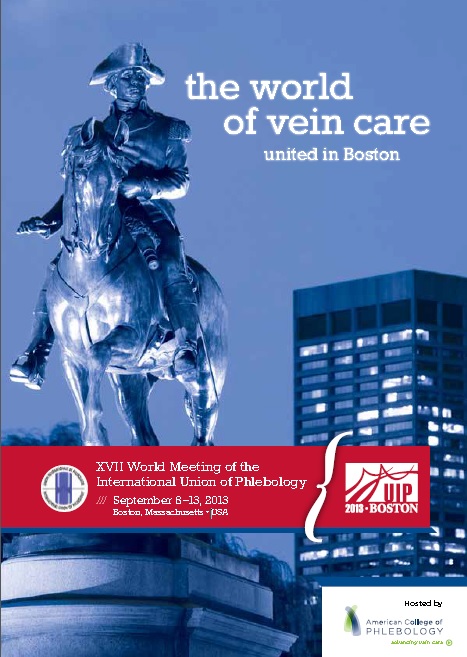
The International Union of Phlebology, in conjunction with the American College of Phlebology held its World Meeting in Boston in September 2013. Held only every 4 years, this was the first time ever in the US. Several QVI staff were invited speakers presenting some original scientific research.
Sydney, Australia

Bill was the International Keynote Speaker at the Australian Sonographer Association Annual National Conference in Sydney.
What a great experience!
To read more about this and our other international teaching

QVI was once again awarded the D.E. Strandness Award for Scientific Excellence at the 2013 SVU Annual Conference.
To read more -
Medical Compression socks continue to be on the forefront of venous treatment. Recently, they have entered the realm of the athlete. To learn more about what compression socks can do you you, please visit compressionsocks.pro

QVI wins the D.E Strandness Award at the 2012 SVU Annual Conference!
Read more about it!
To go to the
CASE OF THE MONTH!
Click the QVI logo
Compression Socks?
We carry the BEST!
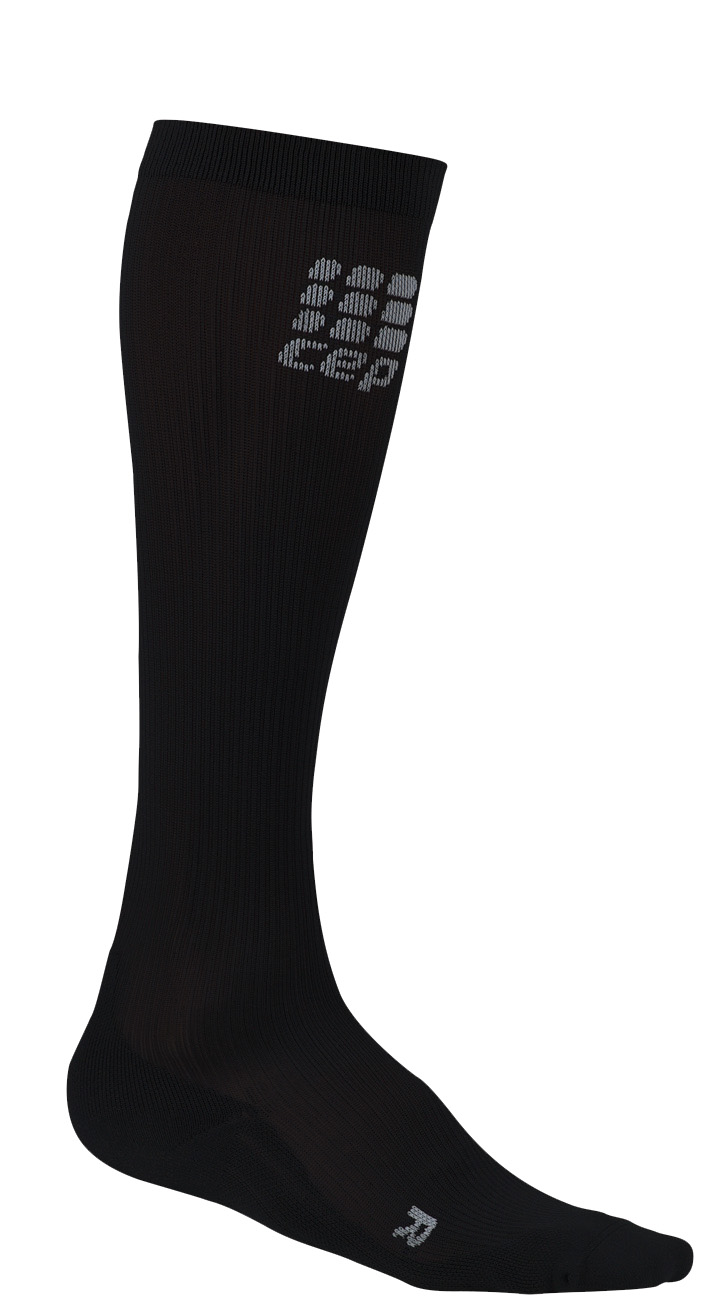
Compression socks are not only a main stay in the treatment of venous and lymphatic disease but are now used by elite athletes everywhere. Please visit our webstore for more information about compression therapy by clicking the image above! .